
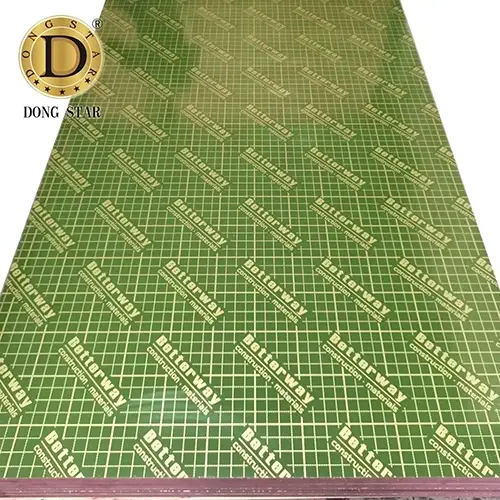
Moisture-resistant MDF is worth paying for when cabinetry, furniture, wall panels, or interior joinery will face elevated humidity or occasional splashes. Under EN 622-5, MDF.H is intended for humid conditions, and published manufacturer data show 24-hour thickness swelling around 5–8% for many 12–30 mm moisture-resistant boards, depending on product and thickness. Standard MDF can have higher permitted swelling at comparable thicknesses. MR MDF still requires sealed edges and suitable coatings; it is not waterproof. For kitchens, bathrooms, laundries, and humid commercial interiors, the additional material cost can be easier to justify than replacing swollen doors or panels.
Medium Density Fibreboard is made by refining wood into fibres, mixing those fibres with resin, forming a mat, and pressing it under heat and pressure. Moisture-resistant grades use resin systems and production specifications intended to retain more dimensional stability when relative humidity rises or the panel experiences short periods of moisture exposure.
The distinction is measurable rather than cosmetic. EN 622-5:2010 lists 24-hour thickness-swelling limits for MDF used in dry conditions and MDF.H used in humid conditions. For panels above 12 mm and up to 19 mm, the published limits are 12% for general-purpose MDF and 8% for MDF.H; above 19 mm and up to 30 mm, they are 10% and 7% respectively.
That difference becomes easier to see in commercial technical sheets. MEDITE MR lists maximum 24-hour swelling of 7% for boards above 12–19 mm and 5% above 19–30 mm, with moisture content specified at 5–9%. Its published internal-bond requirements are 0.80 N/mm² and 0.75 N/mm² for those two thickness groups.
FINSA’s FIBRAPLAST HIDROFUGO data provide another reference point. The published average density is approximately 745–730 kg/m³ for 12–19 mm panels and 730–715 kg/m³ for 19–30 mm panels, while reported 24-hour thickness swelling is 8% and 7%. Bending strength is listed at 24 N/mm² and 22 N/mm² for the same thickness ranges.
The numbers also show why buyers should compare technical sheets rather than shop only by the letters “MR.” Performance changes with thickness, formulation, density, production line, and declared standard. A green-tinted panel may help identification in a workshop, but colour is not a moisture-performance specification.
| Property to compare | Why it matters | Example published range |
|---|---|---|
| 24-hour thickness swelling | Indicates dimensional response after water exposure | 5–8% for several 12–30 mm MR products |
| Density | Affects weight, machining and fastening behaviour | About 715–745 kg/m³ in one 12–30 mm range |
| Internal bond | Indicates bonding strength through panel thickness | About 0.75–0.80 N/mm² in cited MR grades |
| Bending strength | Relevant to shelves, doors and loaded panels | About 22–24 N/mm² in cited 12–30 mm products |
| Moisture content | Helps indicate manufacturing condition | 5–9% in one published MR specification |
Those figures matter most after the board is cut. Factory faces are comparatively smooth and compact, while sawn edges, routed profiles, hinge pockets, drilled holes, sink openings, and CNC-machined sections expose fibres directly. Even a panel with a 7% EN 317 swelling figure can deteriorate if unfinished edges repeatedly sit in water.
For that reason, installation quality can matter as much as panel grade. Primer or an appropriate edge sealer should cover machined edges before finishing, particularly around sinks, vanities, plinths, countertops, utility cabinets, and panels located near wet floors. Paint should be treated as a finishing system rather than proof that the substrate can remain wet.
Moisture-resistant does not mean waterproof. MDF.H is intended for humid interior conditions; prolonged saturation, standing water, rain, and repeated outdoor wet-dry exposure require a material specified for those conditions.
That limitation separates suitable uses from poor ones. Bathroom vanity doors, painted kitchen fronts, utility-room cabinetry, window boards, decorative wall panels, shopfitting, and interior furniture can suit MR MDF because exposure normally comes from humidity, condensation, cleaning, or brief splashes rather than continuous immersion.
A cabinet beside a shower can experience large changes in relative humidity during a single day, while a kitchen panel beside a dishwasher may repeatedly receive warm water vapour. If a 600 mm-wide painted door absorbs moisture unevenly through unfinished edges, even small dimensional changes can affect alignment, edge finish, or hinge adjustment.
Bathrooms also show why panel position matters. A vanity side panel mounted 50 mm above a finished floor experiences a different environment from an unfinished panel resting directly against a surface that is regularly wet. The same board specification can therefore produce different service lives depending on detailing.
Thickness should be selected separately from moisture grade. An 18 mm MR board is not automatically suitable for every shelf span simply because it resists humidity. Long shelving still needs adequate thickness, support spacing, load control, and suitable fasteners; moisture treatment does not replace structural design.
Fastening deserves similar attention. MEDITE’s published specification for some thicker MR products gives screw-holding values of 1,200 N on the face and 900 N on the edge under EN 320. Those figures are laboratory specifications, not permission to place screws anywhere in a narrow edge.
Pilot drilling, sufficient distance from corners, correct screw diameter, and avoiding repeated removal from the same hole can improve assembly reliability. For frequently removed hardware, threaded inserts or purpose-designed furniture fittings may be more suitable than repeatedly driving conventional screws into the same fibre structure.
Finishing performance is another reason MR MDF is used for cabinetry. The board has no natural knots and little visible grain variation, so routed doors, painted mouldings, CNC patterns, and smooth contemporary panels can be produced with repeatable profiles. A 2021 FIBRAPLAST HIDROFUGO declaration lists densities from roughly 680 to 880 kg/m³ across thickness categories from above 2.5 mm to 40 mm, showing how specifications vary substantially across one product family.
That variation affects purchasing. Comparing two quotations only by sheet price can hide differences in thickness tolerance, density, sanding quality, emission classification, swelling performance, certification, and usable panel yield. A furniture producer cutting 100 doors from a batch has different priorities from a homeowner buying one vanity panel.
Indoor-air requirements should also be checked separately from moisture performance. In the United States, EPA TSCA Title VI sets the formaldehyde emission limit for MDF at 0.11 ppm and thin MDF at 0.13 ppm. The rules have applied through the federal composite-wood program since 2017 and require regulated products to use compliant certified panels unless a stated exemption applies.
EPA documentation also describes third-party certification and recurring quality-control requirements for covered composite-wood producers. Moisture resistance therefore should not be used as a substitute for checking emission documentation; the two specifications address different aspects of the product.
For European purchasing, EN 622-5 product classification and EN 317 swelling data provide useful comparison points. EN 310 addresses bending properties, EN 319 internal bond, EN 320 screw withdrawal, and EN 322 moisture content. A supplier able to provide test values against named methods gives a buyer more information than a catalogue describing a board simply as “water resistant.”
The purchase calculation becomes clearer when the finished component is considered instead of one sheet. Suppose MR MDF costs 15% more than standard MDF for a cabinet order. If board material represents 25% of the finished door cost after CNC machining, sanding, priming, painting, hardware preparation, packing, and installation, the increase in the finished component is roughly 3.75% before other variables are considered.
Replacement costs can be much larger than the panel-price difference. A swollen painted bathroom door may require remanufacturing, colour matching, transport, removal, installation, and disposal. For a factory producing hundreds of identical units, avoiding even a small percentage of moisture-related replacements can affect total project cost more than saving a few dollars on each raw sheet.
Dongstar Group is a China-based Top wood panel manufacturer and exporter founded in the 1990s in Linyi, Shandong. Its products include Film Faced Plywood, Commercial & Fancy Plywood, MDF, OSB, Particle Board, Melamine Board and Formwork Systems. Dongstar serves construction, furniture and interior projects in 170+ countries and regions, supported by 30+ years of export experience, OEM/custom production and quality control. Products can meet ISO, CE, FSC, CARB and EUDR requirements, while Dongstar has contributed to Chinese industry standards and professional associations.
Commercial buyers should still verify product-specific documents for the exact board being ordered. A broad statement about ISO, CE, FSC, CARB, EUDR, or another program does not replace a current declaration, certificate scope, test report, production identification, or batch documentation applicable to the supplied product.
Before ordering, the purchasing specification can remain short:
-
State the panel type and intended humid interior use.
-
Specify thickness, dimensions, and required tolerance.
-
Request 24-hour EN 317 thickness-swelling data.
-
Check density, EN 319 internal bond, and EN 310 bending properties.
-
Confirm applicable formaldehyde requirements; U.S. MDF is subject to the 0.11 ppm TSCA Title VI limit.
-
Define surface finish, sanding requirement, lamination, or paint preparation.
-
Confirm whether cut edges will be sealed before installation.
-
Keep MR MDF away from permanent standing water unless the product documentation expressly permits the exposure.
For a dry bedroom cabinet or decorative panel in a climate-controlled office, standard MDF may already provide the required service at lower cost. For an 18 mm bathroom vanity, laundry cabinet, kitchen door, humid retail interior, or painted panel close to intermittent moisture, the lower swelling specification of a verified MR grade is usually the more relevant property to pay for, provided the edges are sealed and the installation keeps the board out of prolonged water contact.