
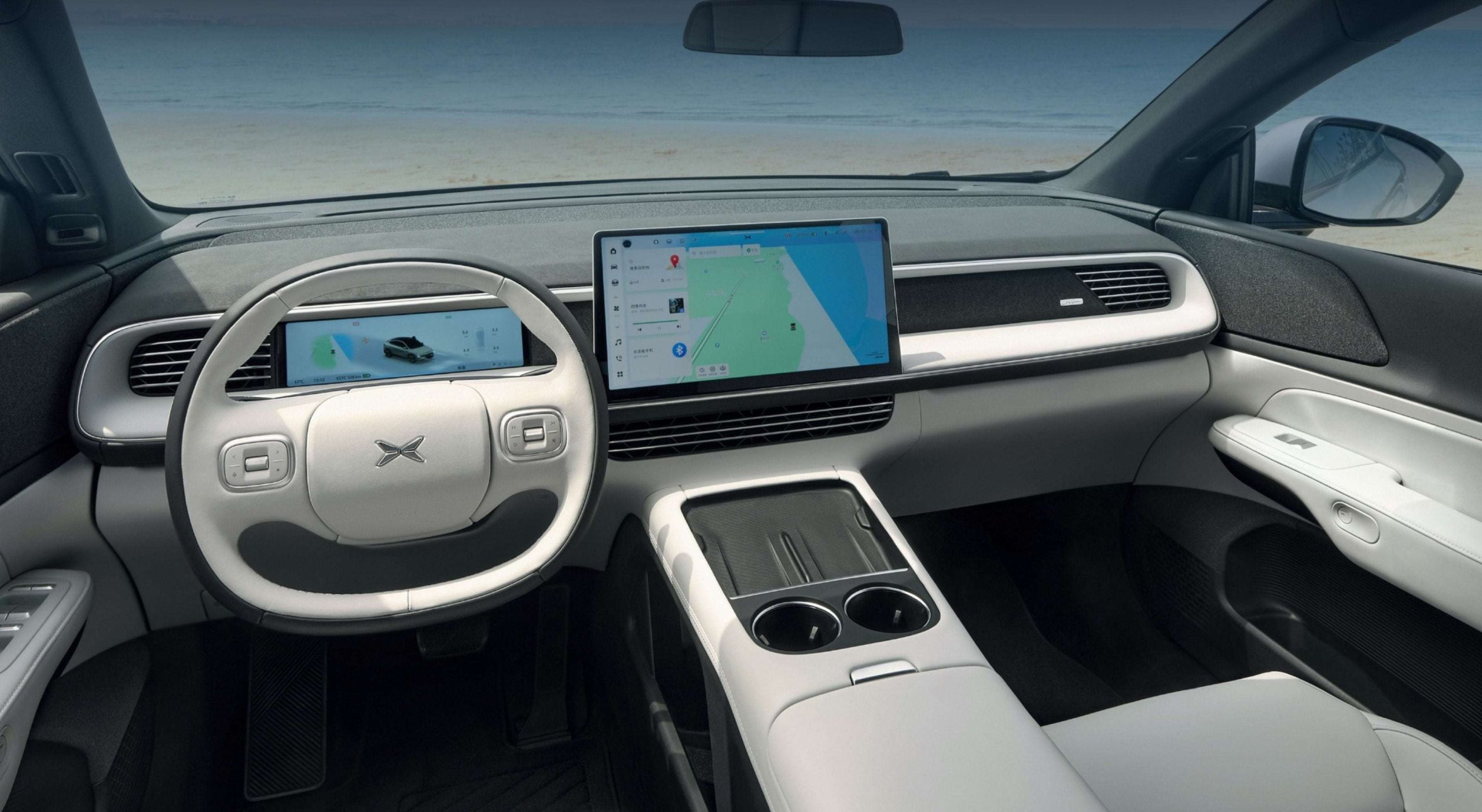
For an Australian family, an EV SUV should be assessed around daily kilometres, home charging, real highway range, rear-seat space, insurance and battery coverage rather than the advertised range alone. In 2025, BEVs represented 8.3% of Australia’s new-vehicle market, while SUVs accounted for 60.7% of total sales. Australia also had more than 100 BEV models available during 2025. A family travelling 15,000 km a year in an SUV using 18 kWh/100 km would consume about 2,700 kWh annually. At A$0.30/kWh, that is roughly A$810 in electricity before charging losses, making charging access and efficiency as important as battery capacity.
Start with the kilometres the household actually covers, not the largest range figure in a brochure. A family travelling 40 km on weekdays uses about 200 km over five days; even an EV delivering 350 km of practical range can cover that pattern comfortably if it is charged at home two or three times a week. Long-distance use needs a different calculation because 110 km/h motorway driving, air-conditioning, cold weather, elevation and a fully loaded cabin can all increase electricity consumption compared with a mixed-cycle laboratory test.
Battery capacity should therefore be read beside efficiency. An 80 kWh battery in an SUV consuming 20 kWh/100 km provides about 400 km from the full usable capacity in a simple calculation, while a 70 kWh vehicle using 16 kWh/100 km works out to about 438 km. The smaller battery can travel farther because it needs 20% less energy per 100 km. Families paying for electricity also benefit from lower consumption every week, rather than only noticing the difference on a long trip.
| Example family EV | Usable battery | Consumption | Calculated range | Energy for 15,000 km |
|---|---|---|---|---|
| SUV A | 80 kWh | 20 kWh/100 km | 400 km | 3,000 kWh |
| SUV B | 70 kWh | 16 kWh/100 km | 438 km | 2,400 kWh |
| SUV C | 75 kWh | 18 kWh/100 km | 417 km | 2,700 kWh |
The table also shows why annual energy use deserves attention. At A$0.30/kWh, 3,000 kWh costs about A$900, compared with A$720 for 2,400 kWh. Real household bills will differ because charging losses can add roughly 5–15%, tariffs vary by retailer and time of day, and rooftop solar changes the calculation. Public DC charging is normally priced differently from residential electricity, so a family relying heavily on public stations should not estimate ownership costs from a home tariff alone.
Charging at home changes the ownership experience more than an extra 50 km of advertised range for many households. The Electric Vehicle Council has reported that more than 80% of charging generally occurs at home or work where owners have suitable parking. A 7 kW AC wall unit can theoretically supply about 56 kWh over eight hours, although the vehicle, charger, battery temperature and charging losses affect the amount stored. For an SUV using 18 kWh/100 km, 56 kWh represents roughly 310 km of theoretical energy replenishment overnight.
A family driving 60 km per day in an EV consuming 18 kWh/100 km uses about 10.8 kWh. Even after allowing roughly 10% charging loss, replacing one day of driving requires close to 12 kWh rather than recharging the entire battery.
That difference matters when choosing home equipment. A household does not need to fill a 70 or 80 kWh battery from empty every night. Owners with a driveway should obtain an electrical assessment covering switchboard capacity, cable distance and available supply before budgeting for a wall charger. Apartment residents need to check strata rules, allocated parking, electricity metering and whether the building can support several residents charging at once. Those questions become more important as EV numbers increase across shared residential parking.
Public infrastructure has expanded substantially. The Electric Vehicle Council reported 1,272 fast-charging locations and at least 4,192 public high-power DC plugs of 24 kW or more in Australia in 2025. Fast-charging locations were up 20% over the preceding 12 months, while high-power plugs increased 22%. Those national totals do not guarantee the same coverage on every regional route, so families should examine the roads they actually use for holidays, sport, work and visits to relatives.
A 500 km family trip, for example, needs different planning from a 25 km school run. If an SUV begins with 90% charge, has 70 kWh of usable battery capacity and consumes 20 kWh/100 km on the highway, it starts with about 63 kWh available, equivalent to roughly 315 km in a simple calculation. Leaving a 10% battery margin reduces the comfortable first leg to about 280 km. A reliable fast charger around the 220–260 km point may therefore matter more than another 20 km on the official range figure.
Peak charging power can also be misleading when used alone. A vehicle advertised at 200 kW may touch that rate only during part of the charging session, while another rated at 150 kW may stay closer to its maximum for longer. Families should compare the manufacturer’s stated 10–80% charging time and independent charging tests where available. Adding 70% to a 75 kWh battery involves around 52.5 kWh; completing that session in 30 minutes requires an average close to 105 kW, not merely a brief peak above 150 kW.
For a family comparing a mid size electric suv with petrol, hybrid and other battery-electric alternatives, exterior length is less informative than the usable cabin. Take the child seats to the showroom if possible. Check whether a rear-facing restraint leaves enough front-passenger legroom, whether two ISOFIX seats still leave a usable centre position, and whether top-tether anchors can be reached without removing luggage. A five-seat SUV can be 4.7 metres long yet still have a narrow second row because body width and door design vary.
Boot capacity needs the same physical check. A quoted 500-litre cargo area does not show whether a folded pram fits below the parcel shelf or whether wheel-arch intrusion makes large suitcases difficult to load. Seven-seat SUVs need even more care because luggage capacity can fall sharply with the third row raised. Families using six or seven seats should test the vehicle with passengers and normal luggage rather than judging it with rows folded flat in a showroom.
A practical showroom check can be kept short:
-
Fit the largest child restraint the family uses and check front-seat travel.
-
Load the pram, two school bags and one medium suitcase together.
-
Sit an adult in every row for at least 10 minutes.
-
Check rear air vents, USB ports and window coverage.
-
Confirm the permitted payload before adding 5–7 occupants and luggage.
-
If towing is planned, verify braked towing capacity and tow-ball limits for the exact 2025 or 2026 variant.
Payload deserves more attention with heavy electric SUVs. Five occupants averaging 70 kg already contribute 350 kg before bags, a roof box, bicycles or towing hardware are added. Another 100 kg of holiday luggage brings the total to 450 kg. Buyers should compare that number with the vehicle’s permitted payload rather than assuming a large SUV can carry any combination of passengers and equipment shown in advertising.
Towing also changes energy use. There is no single percentage reduction that applies to every trailer because mass, frontal area, speed and weather differ, but a caravan can raise electricity consumption substantially on the motorway. If an SUV normally uses 20 kWh/100 km and towing raises consumption to 30 kWh/100 km, a 75 kWh usable battery falls from a calculated 375 km to 250 km before any reserve is allowed. Charger layouts matter too because some parking bays cannot accommodate a connected trailer.
Safety comparisons should go beyond a five-star label because ANCAP publishes separate scores for adult occupants, children, vulnerable road users and safety assistance. As one 2025 reference point, the IM 6 medium electric SUV received 90% for Adult Occupant Protection, 91% for Child Occupant Protection, 83% for Vulnerable Road User Protection and 79% for Safety Assist. The 2025 Tesla Model Y also received a five-star ANCAP rating, and ANCAP named it its highest overall weighted performer among vehicles assessed that year.
For parents, check whether autonomous emergency braking covers pedestrians, cyclists, junctions and reversing situations, and whether a centre airbag is fitted between the front occupants. ANCAP’s 2025 protocols assess more than simple frontal crash protection. Buyers should also check the rating year because a five-star result assessed under an older protocol should not automatically be treated as equivalent to a vehicle assessed under 2025 requirements.
Battery warranties need similarly careful reading. Many new EVs are sold with battery coverage lasting around eight years, often with a kilometre limit and a minimum retained-capacity condition, but terms differ by manufacturer and model. A warranty covering complete battery failure is not identical to one promising a defined remaining-capacity percentage. Families expecting to keep an SUV until 2033 or 2034 should read the Australian warranty document for the exact model year rather than relying on overseas specifications.
Insurance and tyres can alter the annual budget by more than small differences in electricity consumption. Before ordering, obtain insurance quotes using the exact variant, driver profile and postcode. Large 20- or 21-inch EV tyres may also cost considerably more to replace than 18-inch versions. An SUV saving A$200 a year through lower electricity consumption can still cost more overall if its insurance premium is A$500 higher and its tyre set is replaced more frequently.
Australia’s market is already broad enough to compare rather than compromise. FCAI reported that more than 100 BEV models were available during 2025, while BEVs accounted for 8.3% of the new-vehicle market and SUVs represented 60.7% of all new vehicles sold. Electric Vehicle Council figures also recorded more than 103,000 BEV sales during 2025, the first calendar year Australia passed 100,000 battery-electric vehicle sales. Families can therefore compare cabin packaging, 10–80% charging time, ANCAP results, warranty terms and annual running costs across several models instead of choosing on range alone.